Biological Imperatives: Why are we wired for social interaction?
10 Jun 2025
Our Fundamental Need for Connection

Human connection is biologically ingrained, shaped by millions of years and reinforced through complex neural networks.
From the synchronisation of brain activity in social situations to the physiological necessity of communal bonding, connection is foundational to both individual survival and collective advancement. It is a fundamental requirement for wellbeing, deeply embedded in the way our minds and bodies function.
Understanding the fundamental mechanisms of connection allows us to create spaces that authentically support human engagement.

From the way our nervous system responds to social bonds to the evolutionary advantages of communal living, human interaction underpins health, productivity, and collective progress.
Without meaningful connection, psychological and physiological deterioration accelerates, disrupting cognitive stability and reducing emotional resilience. Understanding the fundamental mechanisms of connection allows us to create spaces that authentically support human engagement.
Connection is not just emotionally fulfilling — it is physiologically protective.
Scientific studies show that isolation triggers stress responses similar to physical threats, while sustained social bonds regulate cortisol and promote neurochemical balance. When deprived of social connection, the brain’s reward system becomes dysregulated, leading to heightened anxiety and reduced motivation.
Loneliness has been linked to increased inflammation, cognitive decline, and higher mortality rates.
Social bonding also shapes neural development. The prefrontal cortex reaches full maturity through sustained interpersonal interactions. Similarly, mirror neurons, which enable empathy and shared understanding, strengthen through face-to-face connection, fostering collaboration and social cohesion.
These neurological structures facilitate cooperation and social learning, reinforcing the idea that human intelligence is inherently communal rather than individualistic.
Human societies have always relied on collective interdependence. Anthropologists studying early civilizations note that group bonding increased survival rates, promoting resource sharing and communal defense. Early hunter-gatherer communities thrived not because of individual strength, but because of sophisticated cooperative strategies, where social hierarchies and collective roles optimised survival outcomes.Even today, studies on cooperative behavior demonstrate that trust and reciprocity are reinforced through sustained interaction, whether in workplaces, public spaces, or residential communities. Social capital – the strength of an individual’s communal network – is consistently linked to psychological well-being, economic stability, and societal resilience.
Human connection drives innovation.
Collective knowledge-sharing has been fundamental to cultural and technological evolution, from the formation of ancient cities to modern interdisciplinary collaboration. Without environments that encourage engagement, creativity and progress stagnate.
Download our Connection Whitepaper to learn more.
Download now
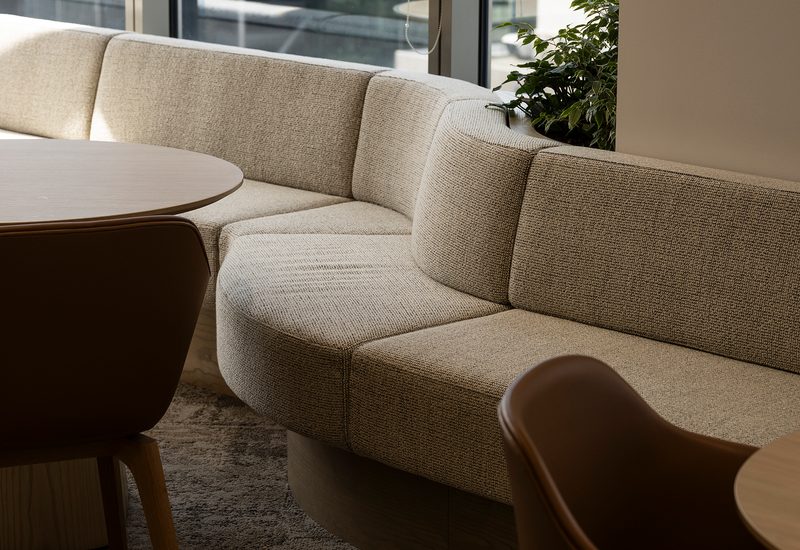





The Harrows Design brand is complemented by a range of international furniture designers.


Beautiful, tailored, commercial furniture for social interaction.
At Harrows we create thoughtfully crafted furniture that inspires meaningful interaction.
Create exceptional furniture everyday. Let’s make something great together.
Stay up to date with news, design and inspiration from the Harrows blog.
At Harrows we believe in sustainability and responsible manufacturing.


Access our extensive library of resources to support your next project including 3D/BIM files, high-res imagery and catalogues.
Product-specific resources including brochures, 3D files for Revit, ArchiCAD, AutoCAD and Sketchup, and high-resolution imagery.
Browse our tagged image library for inspiration on product, finishes and materials.
Download surface swatches for use on 3D models, and browse material colour options for finishes inspiration.
Download catalogues and books to explore new products and projects, read interest pieces or get inspired with design ideas.


Explore how the Harrows approach enhance moments of connection across a diverse range of spaces and industry.
Building social connections and creating lasting memories.
Are you looking to elevate the first impression your business makes on customers? Creating welcoming environments is key to customer satisfaction.
Considering an upgrade or looking for new furniture for your airport or transport hub? Download our Airports Inspiration Profile - 28 pages of inspiration.
The places in our community where we come together - libraries, museums, community hubs and sports and recreation centres.
Are you looking to enhance your campus learning environments? Educational institutions are places where students and faculty come together to foster growth and learning for today and the future.


Explore our project case studies and image gallery for product and fit out inspiration.
Explore our case studies to view project images & inspiration on product, finishes and materials.
Browse our tagged image library to view project images & inspiration on product, finishes and materials.
Are you in the right place?
It looks like you're visiting from New Zealand, would you like to switch to our AU website?
Switch to NZ website?
You're about to leave our Australia and view our New Zealand collection.